At Scouting America’s Alamo Area Council, conservation is not just a merit badge requirement — it is a responsibility. That responsibility is alive and well at Mays Family Scout Ranch, where we are proud to partner in the conservation of one of Texas’ most iconic native species: the Texas Horned Lizard.
 According to the San Antonio Zoo Texas Horned Lizard Reintroduction Project – 2025 Project Report, 2025 marked another strong year for the reintroduction effort led by the Center for Conservation & Research at the San Antonio Zoo. This year alone, 36 zoo-bred and hatched lizards were released, bringing the total number released at the project site to 324 lizards. In addition, ongoing surveys, breeding efforts, and research initiatives continue to strengthen the program.
Why Mays Family Scout Ranch Matters
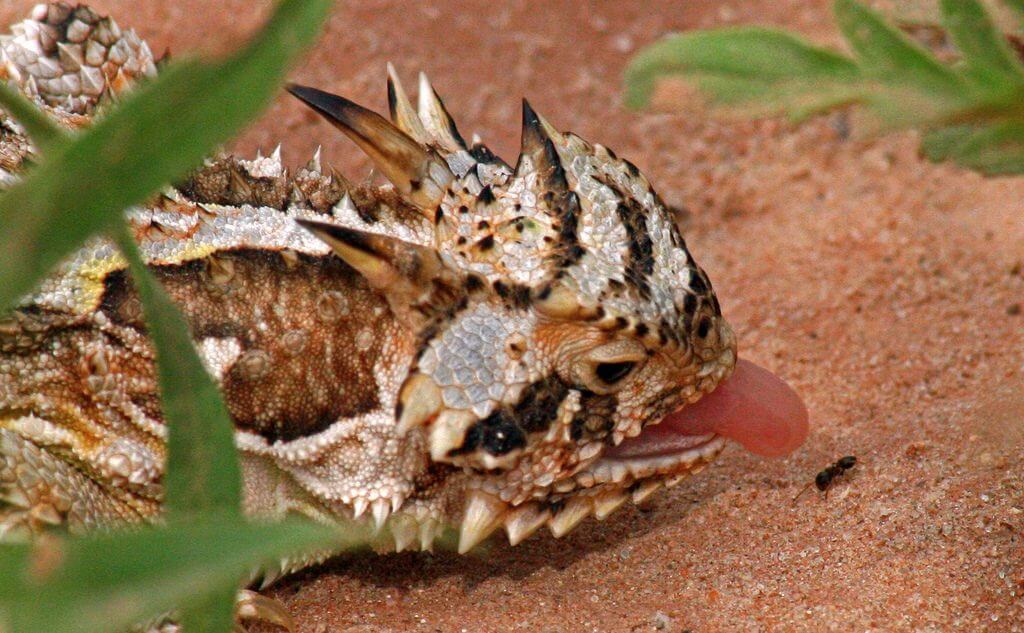
The Texas Horned Lizard depends almost entirely on harvester ants as its primary food source. As the report explains, the project has expanded partnerships to secure additional sources of harvester ants, noting that organizations like Mays Family Scout Ranch have helped augment ant collection efforts to support the growing lizard population.
That means something important:
The ant populations at Mays Family Scout Ranch are not a nuisance to eliminate. They are part of a larger conservation strategy.
Healthy harvester ant colonies mean food security for reintroduced horned lizards…and food security means higher survival rates and long-term recovery for this threatened Texas species.
This is conservation in action — and we are honored to play a role.
 A Year of Progress
The 2025 report highlights significant milestones:
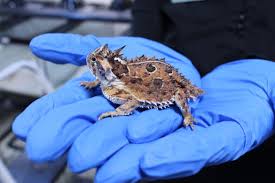
36 hatchlings released this season
8 formal surveys conducted at the release site
Continued breeding success at both San Antonio Zoo and Zoo Miami
Expansion of research into lizard health, reproduction, and genetics
This steady progress is encouraging. While survey teams primarily detected scat rather than live lizards during transects, genetic testing and monitoring continue to inform long-term success. Conservation is rarely flashy; it is methodical, patient, and data-driven…and it appears to be working.
Why We Do NOT Poison the Ants
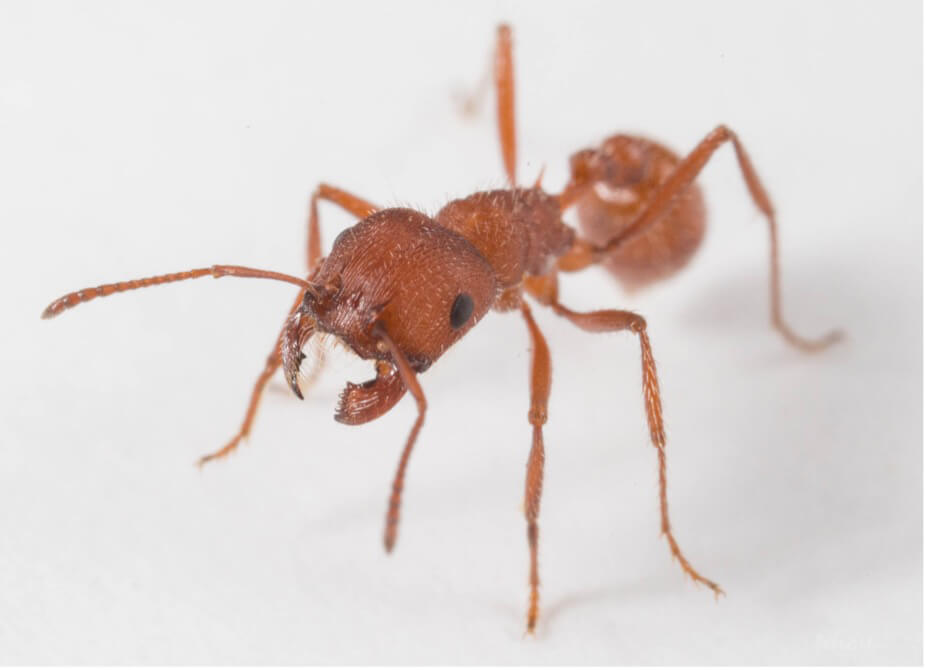 Because harvester ants are essential to the horned lizard’s survival, we do not use poison treatments to eliminate ant colonies at Mays Family Scout Ranch. We understand that campers may encounter ant mounds. That is part of being in a healthy, functioning ecosystem. Instead of eliminating ants, we ask our campers and leaders to:
-
Choose campsite locations wisely
-
Avoid setting up tents directly on ant pathways
-
Stay clear of visible ant colonies
-
Respect the natural habitat
A Scout is conservation-minded. We adapt to nature; we do not attempt to remove it for convenience.
Teaching Conservation by Living It
Scouting has always emphasized stewardship of the outdoors. At Mays Family Scout Ranch, that stewardship is not theoretical. It is practical.
When Scouts learn to observe their surroundings, relocate a tent a few feet to protect a habitat, or explain why harvester ants matter, they are practicing exactly what conservation education is meant to teach. They are doing their duty to the land. And through our partnership with the Texas Horned Lizard Reintroduction Project, they are helping ensure that future generations of Texans may once again see these remarkable creatures thriving in their native habitat.
We celebrate the progress. We honor the science. And we remain committed to protecting the ecosystems entrusted to us. Because conservation is not optional.
It’s our duty.

